
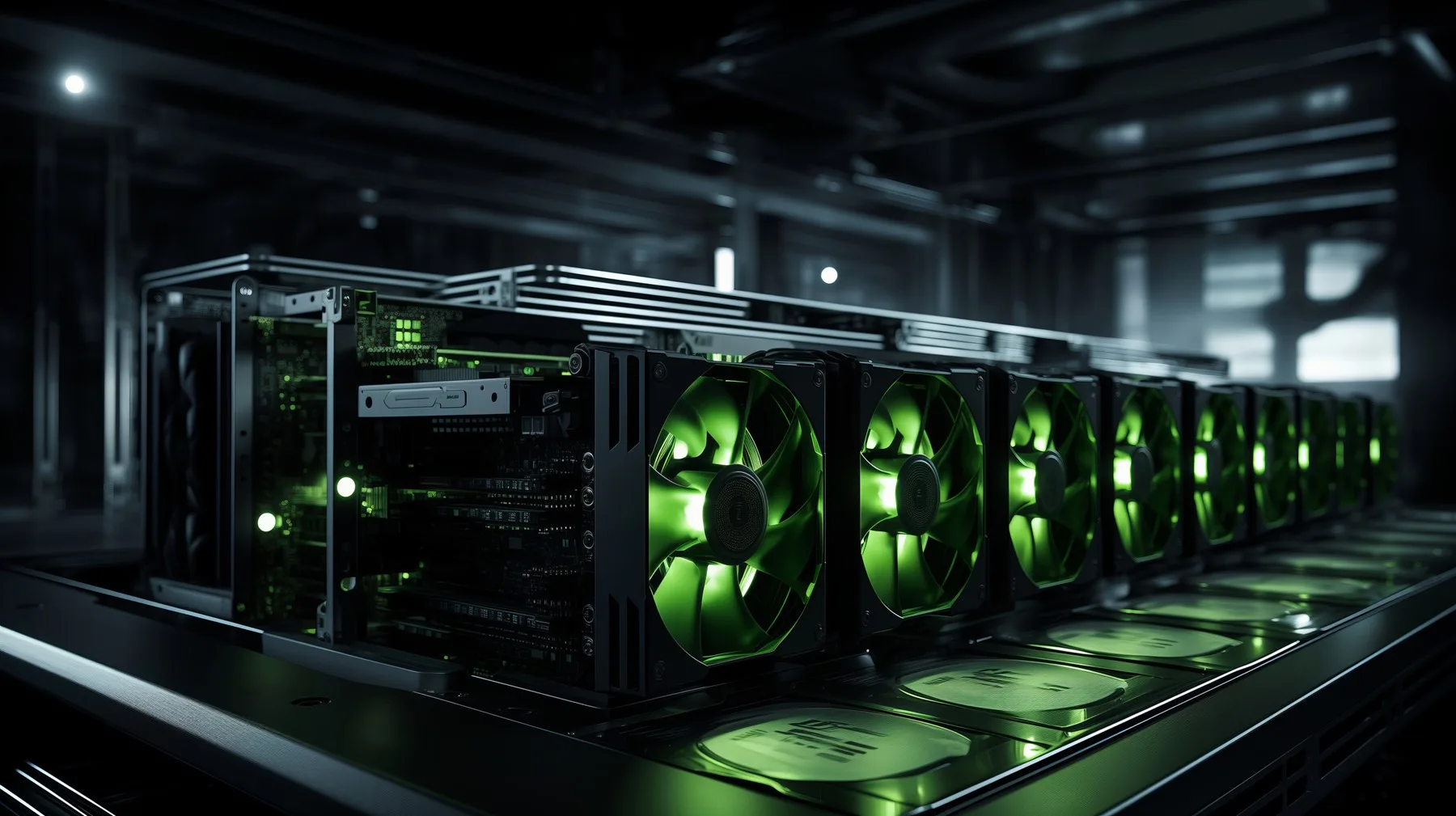

The Rise of GPU Servers in Modern Hosting
As businesses increasingly rely on high-performance computing, traditional CPU-based servers are no longer enough for some of the most demanding workloads. If you’re training AI models, rendering ultra-HD video, or running complex scientific simulations, you’ll likely need something with more raw graphical horsepower.
Enter the GPU server, a specialist type of server designed to handle the most demanding tasks with incredible speed and precision.
But what exactly is a GPU server? And how does it compare to traditional hosting solutions?
What is a GPU Server?
A GPU server is a physical or virtual machine equipped with one or more Graphics Processing Units (GPUs), also known as Graphics Cards. Unlike CPUs, which are designed for sequential task execution, GPUs excel at handling thousands of tasks simultaneously, making them ideal for data-heavy, parallel computing environments.
Originally developed to render images and video for games and graphics, GPUs are now widely used in industries like artificial intelligence, machine learning, data science, and scientific computing.
While traditional servers rely heavily on CPUs (Central Processing Units), GPU servers leverage the power of both – but with the GPU doing the heavy lifting for intensive tasks.

GPU Servers vs CPU Servers: What’s the Difference?
At a glance, both GPU servers and CPU servers provide computational power, but they serve very different purposes, and understanding these differences is crucial when choosing the right hosting solution:
-
Best Use Cases
CPU servers are ideal for general-purpose tasks. Think website hosting, running databases, or handling business applications, tasks that require solid, dependable performance but don’t necessarily demand huge processing power.GPU servers, on the other hand, are built for high-performance, specialised workloads. If you’re working with artificial intelligence, deep learning, complex simulations or 3D rendering, a GPU server is far better suited. They’re specifically designed to handle thousands of simultaneous operations, which makes them perfect for compute-intensive environments.
-
Parallel Processing
One of the key advantages of GPU servers is their ability to perform parallel processing at scale. CPUs are excellent at handling tasks in a sequence, one at a time, very quickly. But when it comes to performing thousands of similar tasks at once, they can struggle. That’s where GPUs shine. With their massively parallel architecture, GPUs can process hundreds or thousands of threads simultaneously, making them far more efficient for data-heavy, repetitive workloads.
-
Performance and Latency
In terms of raw performance, GPU servers offer a significant advantage for tasks that benefit from parallelisation. They excel at breaking down large datasets and processing them concurrently. While a single task may have slightly higher latency on a GPU, the overall time to complete complex workloads is vastly reduced. For businesses dealing with AI models, large-scale analytics, or graphical rendering, this kind of power is a game-changer.
-
Cost
CPU-based hosting is typically more affordable upfront. It’s a great option for standard websites and services that don’t require high-level processing. GPU servers tend to carry a higher price tag due to their premium hardware and specialist capabilities. However, for the right tasks, they offer better efficiency and faster results, making them more cost-effective in the long run.
What are the Main Uses Cases for GPU Servers?

Final Thoughts: Is a GPU Server Right for You?
A GPU server isn’t just a faster server, it’s a different class of performance. Designed to meet the most demanding workloads, it provides unparalleled power for graphics, AI, scientific, and data-heavy applications.
Whether you’re a developer, data scientist, or business owner scaling your compute power, GPU servers provide the horsepower to accelerate your success.
Interested in your own GPU Server?
Contact us today for a custom solution designed around your unique needs.